
Quarterly News from LTWD – Summer 2026
July 2026
Capital Projects: Building for Today and Tomorrow
When you turn on the tap, you see clear, clean water flowing immediately. What you don’t see is the extensive network of pipes, pumps, tanks, and treatment facilities working around the clock to make that possible. In 2026, LTWD is moving forward with some of the most significant infrastructure investments in the District’s history — projects that will strengthen service reliability, support our growing region, and protect water quality for decades to come.

Markham Tank – A 7-Million-Gallon Leap Forward
One of our most ambitious undertakings is the Markham Tank, a proposed 7-million-gallon concrete water storage tank to be built on LTWD-owned property west of I-25, north of County Road 38. This addition will dramatically increase storage capacity in a rapidly developing part of our service area, helping to maintain water pressure and reliable delivery even during peak summer demand.
The new tank will be fed by the existing 24-inch transmission line and will deliver water through a new 30-inch transmission line serving both the Barefoot Lakes development and other growth areas in the Town of Mead service area. Design is currently about 30% complete, with construction expected to run through 2028.
Why does this matter to you? More storage means more resilience. When demand spikes on a hot July weekend, the Markham Tank will be there as a buffer, helping maintain steady pressure and preventing the kind of supply stress that can affect service quality.
Northeast Transmission Line – Connecting the System
The Northeast Transmission Line is a 4-mile pipeline running along Larimer County Road 16. It connects the Twin Mounds storage tanks west of I-25 to waterlines east of I-25, delivering additional pressure to the northeast quadrant of the system during high-demand periods. It also provides a redundant east-west supply route when other lines require maintenance or repair, meaning fewer service disruptions for customers.
Funded by bonds issued in 2020, this project has touched approximately 22 properties in a fast-growing corridor. Phase 1 construction is now complete. Phase 2 is in the design phase, and final easement acquisition is ongoing, with expected completion in 2026.
Carter Lake Filter Plant Expansion – More Capacity, Greater Flexibility
LTWD’s water is treated at the Carter Lake Filter Plant, a shared facility operated jointly with Central Weld County Water District. The plant is currently rated at 50 million gallons per day (MGD) and a major expansion is now underway to increase that capacity to 72 MGD.
This isn’t just about keeping up with growth. The expanded pretreatment infrastructure will also give the plant greater flexibility to handle a wider range of raw water quality conditions — an important advantage in a region where snowpack and drought variability can affect water sources from year to year. The project is expected to take three years to complete, at a total cost of approximately $56 million. LTWD’s share is half, with $15 million already bonded.
30” Barefoot Line – A Smart Growth Partnership
The Barefoot Lakes subdivision in Firestone requires a new water transmission line to support its continued buildout. Rather than install a standard 24-inch line, LTWD partnered with the developer to upsize it to 30 inches, a move that creates additional capacity for future development in the Town of Mead service area.
The developer is covering upfront construction costs, and LTWD will reimburse the cost difference between the 24-inch and 30-inch sizes using Plant Investment Fee (PIF) revenue from new tap connections. Construction began in March 2025 and is approximately 75% complete, with testing and commissioning expected in fall 2026.
H2 Infrastructure – Unlocking New Water Sources
LTWD owns shares in two irrigation ditch companies: Consolidated Home Supply Company and Handy Ditch. The H2 Infrastructure Project will put those water rights to work for municipal use, using a pump station and approximately 4 miles of pipeline to move that water to Dry Creek Reservoir, where it can then be conveyed to the Carter Lake Treatment Plant for delivery to customers.
Design is approximately 60% complete for the pipeline portion and 20% complete for the pump station. Construction is planned for completion in 2028.
How Are These Projects Funded?
LTWD carefully plans how capital projects are financed so that the right stakeholders pay for the right improvements:
- Growth-related infrastructure, like new tanks and transmission lines serving expanding areas, is funded through Plant Investment Fees (PIFs) paid by developers and new connections. Existing customers are not asked to subsidize new growth.
- System-wide reliability improvements , like treatment plant expansions and pipeline replacements, are funded through bond proceeds and capital reserves built over time.
- Routine replacement of aging assets is budgeted annually to address wear before it becomes an emergency, avoiding the far higher cost of reactive repairs.
These projects may not be visible from your driveway, but they’re the foundation of the reliable, safe water service you depend on every day.
Visit the Capital Projects page on our website to stay up to date on project timelines.
Your 2025 Water Quality Report Is Here
Every year, LTWD is required to publish a Consumer Confidence Report (CCR) summarizing the quality of your drinking water. We’re pleased to report that LTWD’s 2025 water quality results are excellent, all regulated contaminants were well within federal and state safe drinking water standards, with no violations to report.
The report covers both LTWD’s distribution system and water treated at the Carter Lake Filter Plant. Testing is conducted regularly throughout the year, covering a wide range of potential contaminants including bacteria, lead, copper, nitrates, and disinfection byproducts.

A few highlights from this year’s report:
- All detected contaminants were far below the Maximum Contaminant Levels (MCLs) set by the EPA.
- No health-based violations occurred in 2025.
- Water quality monitoring met all state and federal sampling requirements.
The 2025 CCR is one of the most straightforward reports we’ve published in recent years, and that’s a reflection of the ongoing investment LTWD makes in treatment, infrastructure, and monitoring.
Read the full 2025 Water Quality Reports
LTWD Is Conducting a Water Rate and Fee Study
Water rates exist to recover the true cost of treating and delivering safe, reliable water to every tap in our service area. To ensure those rates remain fair, accurate, and financially sustainable, LTWD has engaged a third-party, Willdan Financial Services, to conduct a comprehensive Water Rate and Fee Study.
What the Study Covers
The study is a structured, multi-step analysis that looks at the full picture of LTWD’s financial position and cost structure. Key areas being examined include:

- Residential and non-residential water rates, updated based on a cost-of-service analysis that allocates costs equitably across customer types.
- Annual allotment methodology and rates, to ensure the framework reflects current demand and supply conditions.
- Plant Investment Fees (PIFs), which are one-time fees charged to new connections to fund growth-related infrastructure.
- Cash-in-lieu fees and accessory dwelling unit fees.
- Miscellaneous fees such as development review, after-hours disconnect/turn-on, and fire sprinkler annual fees.
Willdan’s team will build 10-year financial planning models, run multiple scenarios with District staff, and present preliminary and final findings to the LTWD Board of Directors. From there, the board will deliberate and set rates and fees for 2027. The process is designed to be transparent and rigorous, and the final recommendations will be shared publicly.
Why Rate Studies Matter
A water rate study isn’t just an accounting exercise, it’s a planning tool. It answers critical questions: Are the rates we charge actually covering our costs? Are different customer groups paying their fair share? Do our fees reflect the true cost of the services we provide?
Without periodic rate studies, utilities risk undercharging for services, depleting reserves, or passing costs unfairly from one group of customers to another. A well-conducted study helps LTWD stay financially healthy, maintain debt coverage requirements, and fund capital investments without surprise rate hikes.
We expect the rate study to be completed later this year and will host a public rate hearing this fall. After the board approves 2027 rates, they will be posted to our website and shared with customers through our communication channels.
View our current Rates, Charges and Allotments.
Water Shortage Status: We’re at Watch - Here’s What That Means

As we enter peak summer watering season, LTWD remains at the Watch status under our Water Shortage Contingency Plan. This is the first and lowest action level in our plan, meaning no mandatory watering restrictions are in place but voluntary conservation remains important.
Each April, after Northern Water announces the Colorado-Big Thompson (C-BT) Project quota, LTWD updates its action level. This year’s C-BT quota is 80%, which translates to a Watch designation based on our supply outlook.
What Watch Means for You
At the Watch level, we ask customers to follow these voluntary guidelines to help protect our shared water resources:
- Water no more than 3 days per week. You choose the days.
- Water during cooler hours — before 10 a.m. or after 6 p.m. — to reduce evaporation loss.
- Check irrigation systems for leaks, broken heads, or runoff.
- Follow best practices for lawn and plant watering based on current weather conditions.
Colorado’s weather can shift quickly. Our contingency plan allows LTWD to respond promptly and fairly if supply conditions change — and gives customers as much advance notice as possible. We will communicate any status changes through our website, email, and social media channels.
For a deeper look at how LTWD and the region approach long-term drought preparedness, check out our recent blog post on drought planning.
Review the full Water Shortage Contingency Action Plan
How Do You Track Your Water Use? Tell Us for a Chance to Win
Summer is here, and with it comes longer days, greener lawns, and higher water use. It’s also the time of year when staying on top of your consumption matters most — both for your bill and for the shared water supply we all depend on.
We’re running a quick customer survey this season: How do you track your water use? Your answer helps us understand how customers are engaging with their water consumption — and how we can better support you in managing it.
Why Tracking Matters
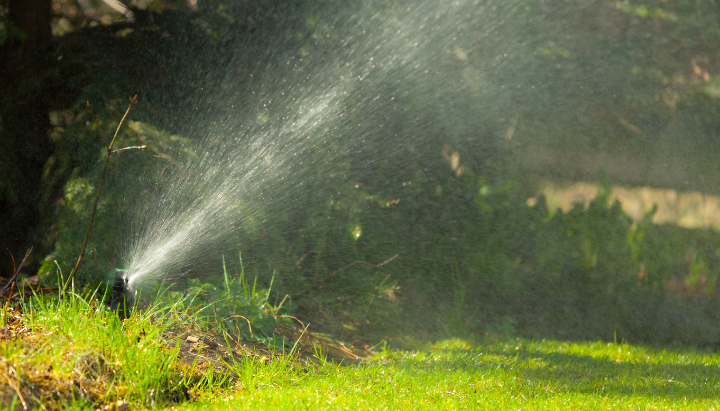
Every LTWD tap has an annual water allotment. Staying within that allotment keeps your bill predictable and helps ensure there’s enough water for everyone in the community. Going over your allotment results in surcharges — and catching a spike in usage early can also alert you to a leak before it becomes a costly problem.
One of the easiest ways to monitor your usage in real time is through EyeOnWater, LTWD’s free water monitoring tool. With EyeOnWater, you can:
- View your daily and hourly water use from any device.
- Set custom alerts if your usage spikes unexpectedly — a potential sign of a leak.
- Track your progress toward your annual allotment throughout the season.
- Compare your usage patterns week-over-week or year-over-year.
Sign up or log in at littlethompsonwd.gov/eyeonwater to get started.
Take the Survey — Win a $25 Bill Credit
Take our short survey and you’ll be entered for a chance to win one of three $25 credits on your LTWD account. We’ll use your responses to improve the tools, resources, and programs we offer to help you manage your water use more easily.